
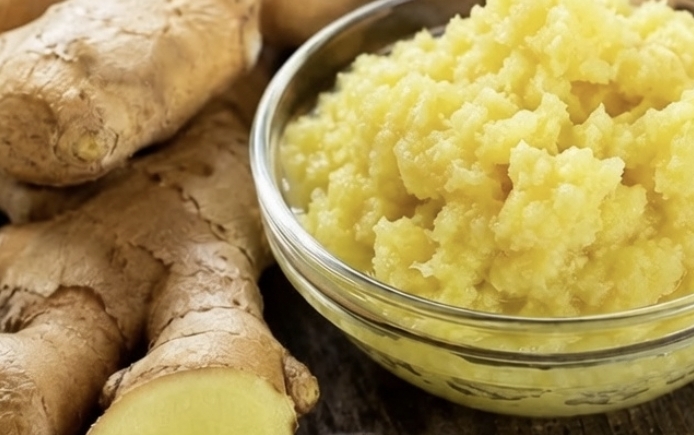
Could Ginger Become a Simple Addition to Your Skincare Routine?
When people think about skincare, they often focus on the face while forgetting another area that reveals age just as quickly—the neck.
The skin on the neck is thinner, constantly moving, and exposed to daily stress from sunlight, environmental pollutants, clothing friction, and even hours spent looking down at phones and tablets.
Because of this, many people begin searching for simple home remedies that promise smoother, firmer-looking skin.
Among the most talked-about ingredients is fresh ginger.
Its warm aroma, spicy scent, and distinctive sensation on the skin have made it popular in homemade beauty recipes across many cultures.
But before believing dramatic “before and after” photos shared online, it’s worth asking a more realistic question:
What can ginger actually contribute to a skincare routine?
The answer is more balanced—and ultimately more useful—than many viral videos suggest.
Why the Neck Often Shows Signs of Aging First
Many adults notice changes in their neck before they notice them elsewhere.
Common concerns include:
- Fine lines
- Dryness
- Uneven skin tone
- Loss of softness
- Crepey texture
- Reduced elasticity
These changes don’t happen because of one single cause.
Instead, they develop gradually as several factors work together.
Among them are:
- Natural aging
- Sun exposure
- Reduced collagen production
- Repeated neck movement
- Dehydration
- Environmental stress
- Inconsistent skincare
This is why no single ingredient can erase years of accumulated change.
Healthy-looking skin is usually the result of daily care practiced consistently over time.
Why Ginger Has Become Popular in Skincare
Ginger has been valued for centuries in both cooking and traditional wellness practices.
Today, researchers continue studying ginger because it naturally contains several biologically active plant compounds, including:
- Gingerols
- Shogaols
- Zingerone
- Various antioxidant compounds
These substances have attracted scientific interest because of their antioxidant activity in laboratory research.
However, laboratory findings do not automatically translate into dramatic cosmetic results on human skin.
Current clinical evidence supporting topical ginger as an anti-aging treatment remains limited.
That distinction is important.
Ginger may complement a skincare routine—but it should not be viewed as a replacement for proven skincare practices.
Understanding Gingerols and Shogaols
Fresh ginger contains compounds known as gingerols.
As ginger dries or is heated, some gingerols naturally transform into related compounds called shogaols.
Researchers continue investigating these compounds because they exhibit antioxidant activity under laboratory conditions.
Oxidative stress is one factor associated with normal skin aging.
Because of this, ingredients containing naturally occurring antioxidants continue to receive scientific attention.
Still, skincare is far more complex than applying one antioxidant-rich ingredient.
Healthy skin depends on multiple factors working together.
The Importance of a Complete Skincare Routine
Many people search for one ingredient that will solve every concern.
Unfortunately, skin doesn’t work that way.
Visible skin health depends on habits such as:
- Daily sunscreen
- Gentle cleansing
- Regular moisturizing
- Adequate hydration
- Nutritious eating
- Good sleep
- Avoiding smoking
- Managing stress
Ginger may become one small part of this routine—but it cannot replace the basics.
What Ginger May Contribute
Although evidence for dramatic cosmetic improvements is limited, many people enjoy incorporating ginger into gentle skincare routines for several practical reasons.
1. A Pleasant Warming Sensation
One of ginger’s most recognizable characteristics is the gentle warming sensation it may create when included in properly diluted topical preparations.
Many people find this sensory experience refreshing.
Rather than producing immediate visible changes, it often makes the skincare routine itself feel more engaging.
Sometimes enjoying a routine makes it easier to maintain consistently.
2. Antioxidant Plant Compounds
Fresh ginger naturally contains antioxidant compounds that continue to be studied by researchers.
While more clinical research is needed regarding topical skincare applications, antioxidant-rich ingredients remain popular because they help protect plant tissues and are being investigated for potential cosmetic uses.
This doesn’t mean ginger reverses wrinkles.
Instead, it contributes one group of naturally occurring plant compounds within a broader skincare routine.
3. Encouraging Daily Self-Care
Perhaps one of ginger’s greatest benefits has nothing to do with chemistry.
Preparing a simple skincare routine encourages people to spend a few quiet minutes caring for themselves.
That consistency often becomes more valuable than constantly switching between expensive products.
Healthy routines are built through repetition.
4. Supporting a Mindful Approach to Skincare
Many skincare routines fail because they become too complicated.
Ten different products.
Several application steps.
Constantly changing recommendations.
A simple routine centered around cleansing, moisturizing, sunscreen, and occasional carefully prepared natural ingredients may feel much easier to maintain.
Simple routines are often the ones people actually continue.
Why “Natural” Doesn’t Always Mean Gentle
This point deserves special attention.
Although ginger is a natural ingredient, it can still irritate the skin.
Some people experience:
- Burning sensations
- Redness
- Itching
- Irritation
- Dryness
For this reason, ginger should always be tested on a small area of skin before broader application.
People with sensitive skin should be especially cautious.
Never apply ginger directly to:
- Broken skin
- Open wounds
- Active rashes
- The eyelids
- The eye area
If irritation develops, discontinue use immediately.
The Most Effective Anti-Aging Habit Is Surprisingly Simple
Among all skincare ingredients available today, one habit consistently receives the strongest scientific support:
Daily sunscreen.
Ultraviolet radiation remains one of the leading contributors to visible skin aging.
No homemade remedy—including ginger—can compensate for repeated sun exposure without protection.
Daily broad-spectrum sunscreen, combined with gentle moisturizing and healthy lifestyle habits, remains the foundation of effective skincare.
Building Realistic Expectations
One of the biggest mistakes people make is expecting visible transformation within days.
Healthy skin rarely changes that quickly.
Instead, improvements in skin comfort and appearance usually depend on:
- Consistent hydration
- Gentle cleansing
- Daily sunscreen
- Appropriate moisturizers
- Nutritious eating
- Good sleep
- Patience
Ginger may become an enjoyable addition to this larger picture.
But it works best when expectations remain realistic.
In the next section, we’ll explore safe ways to prepare ginger for topical use, explain why dilution matters, discuss common mistakes to avoid, and share simple skincare habits that often have a greater long-term impact than any single ingredient.
How to Use Ginger in a Gentle Skincare Routine
If you’re interested in trying ginger as part of your skincare routine, simplicity is usually the best approach.
Rather than applying concentrated ginger juice directly to the skin, think of ginger as an occasional supporting ingredient that complements proven skincare essentials such as cleansing, moisturizing, and daily sunscreen.
The goal isn’t to dramatically transform your skin overnight.
It’s to build healthy habits that you can comfortably maintain.
A Simple DIY Ginger Face and Neck Mask
This gentle recipe is designed for occasional cosmetic use only.
Ingredients
- 1 teaspoon finely grated fresh ginger
- 2 tablespoons plain yogurt
- 1 teaspoon honey (optional)
Directions
- Wash the ginger thoroughly.
- Grate a small amount finely.
- Mix it with plain yogurt.
- Add honey if desired.
- Stir until smooth.
- Apply a thin layer to clean skin on the neck or face, avoiding the eyes.
- Leave on for approximately 5–10 minutes.
- Rinse thoroughly with lukewarm water.
- Follow with a gentle moisturizer.
Because ginger may cause irritation, this mixture should not be left on the skin for extended periods.
Always Perform a Patch Test First
Even natural ingredients can trigger skin reactions.
Before using any homemade preparation:
- Apply a small amount behind your ear or on your inner forearm.
- Wait at least 24 hours.
- Watch for redness, itching, burning, or swelling.
If irritation occurs, do not continue using the product.
Patch testing is especially important for people with:
- Sensitive skin
- Eczema
- Rosacea
- Contact allergies
- Recently treated skin
Eight Ways Ginger May Complement Your Skincare Routine
1. It Makes Self-Care Feel More Intentional
Taking a few minutes to prepare and apply a skincare treatment often encourages consistency.
Many people discover that the routine itself becomes just as valuable as the ingredients.
Consistency is one of the strongest predictors of long-term skincare success.
2. It Adds Naturally Occurring Antioxidant Compounds
Fresh ginger contains gingerols and related plant compounds with antioxidant activity observed in laboratory studies.
Although evidence for significant anti-aging effects from topical application remains limited, antioxidant-rich ingredients continue to be of interest in cosmetic research.
3. It Creates a Pleasant Sensory Experience
Many users appreciate ginger because of the gentle warming sensation it may produce.
That mild warmth can make skincare routines feel refreshing and invigorating without relying on heavily fragranced products.
If the sensation becomes uncomfortable, rinse the product off immediately.
4. It Encourages Gentle Massage
Applying moisturizer or a homemade mask often includes light massage.
Gentle upward strokes may improve the overall skincare experience by encouraging people to pay attention to often-neglected areas such as the neck.
Avoid aggressive rubbing, which may irritate delicate skin.
5. It Pairs Well With Moisturizing Ingredients
Ginger works best alongside ingredients that support the skin barrier.
Examples include:
- Plain yogurt
- Aloe vera gel
- Colloidal oatmeal
- Fragrance-free moisturizers
- Hyaluronic acid creams
- Ceramide-rich lotions
Combining gentle hydration with minimal irritation should always be the priority.
6. It Encourages Better Neck Care
Many people apply moisturizer only to the face.
The neck often receives much less attention despite experiencing similar sun exposure.
Including the neck whenever you apply:
- Moisturizer
- Sunscreen
- Gentle cleansers
may help support a more consistent skincare routine.
7. It Promotes Mindful Daily Habits
A short skincare routine creates an opportunity to slow down.
Rather than rushing through the day, those few quiet minutes often encourage relaxation and self-care.
Stress management itself plays an important role in overall wellness.
8. It Complements—Not Replaces—Evidence-Based Skincare
Perhaps the most important benefit is perspective.
Using ginger responsibly reminds us that healthy skin depends on multiple habits working together rather than one miracle ingredient.
Common Mistakes to Avoid
Applying Pure Ginger Juice
Fresh ginger juice may be too irritating for many skin types.
Always dilute ginger appropriately or use products formulated for cosmetic use.
Leaving It on Too Long
Longer application does not necessarily produce better results.
Extended exposure increases the likelihood of irritation.
Five to ten minutes is generally sufficient for occasional homemade masks.
Skipping Moisturizer
Even if your skin feels comfortable after rinsing, moisturizing helps support the skin barrier.
Choose a gentle moisturizer suitable for your skin type.
Forgetting Sunscreen
This is one of the biggest mistakes people make.
Daily broad-spectrum sunscreen remains one of the most effective ways to help reduce visible signs of premature skin aging.
Natural ingredients cannot replace UV protection.
Using Ginger on Damaged Skin
Do not apply ginger to:
- Cuts
- Scratches
- Sunburn
- Active eczema
- Open acne lesions
- Inflamed skin
Wait until the skin has healed before considering any topical treatment.
Ingredients That Pair Well With Ginger
If your skin tolerates ginger, consider combining it with gentle skincare ingredients rather than harsh exfoliants.
Examples include:
Plain Yogurt
Provides a creamy texture and helps dilute fresh ginger.
Aloe Vera Gel
Offers lightweight hydration and is commonly used in soothing skincare products.
Honey
Acts as a natural humectant that helps attract moisture to the skin.
People with honey allergies should avoid this ingredient.
Oatmeal
Finely ground oatmeal is often used in skincare designed for dry or sensitive skin.
Its mild nature balances stronger ingredients.
Daily Habits That Have Stronger Scientific Support
Although homemade skincare can be enjoyable, research consistently shows that these habits have the greatest long-term impact on skin appearance.
Wear Sunscreen Every Day
Choose a broad-spectrum sunscreen with SPF 30 or higher whenever appropriate.
Reapply according to product directions.
Moisturize Regularly
Healthy skin depends on maintaining its protective barrier.
Apply moisturizer after cleansing while the skin is still slightly damp.
Stay Hydrated
Adequate hydration supports overall health.
While drinking water alone won’t erase wrinkles, hydration contributes to normal skin function.
Eat a Colorful Diet
Fruits and vegetables provide vitamins and naturally occurring antioxidant compounds that support overall health.
Get Enough Sleep
Skin undergoes important repair processes during sleep.
Aim for seven to nine hours of quality rest whenever possible.
A Simple Morning and Evening Routine
Morning
- Cleanse gently.
- Apply moisturizer.
- Use broad-spectrum sunscreen.
- Protect your neck as carefully as your face.
Evening
- Remove sunscreen and makeup.
- Cleanse gently.
- Apply moisturizer.
- Use a ginger-based DIY mask occasionally if your skin tolerates it well.
- Finish with a nourishing night cream if desired.
Small, consistent habits almost always outperform complicated routines that are difficult to maintain.
The healthiest skin routines are the ones you can comfortably follow week after week—not the ones that promise impossible overnight transformations.
Frequently Asked Questions
1. Can ginger remove neck wrinkles?
There is currently no strong clinical evidence showing that topical ginger can remove wrinkles or reverse skin aging.
Ginger contains naturally occurring antioxidant compounds, but healthy-looking skin depends on many factors, including sun protection, hydration, moisturization, genetics, and overall lifestyle.
2. Is fresh ginger better than powdered ginger for skincare?
Fresh ginger is commonly used in homemade skincare recipes because it contains naturally occurring gingerols.
However, fresh ginger may also be more likely to cause irritation.
Whether using fresh or powdered ginger, proper dilution and patch testing are essential.
3. How often should I use a ginger mask?
For most people with skin that tolerates ginger, using a diluted homemade mask once or twice a week is generally sufficient.
Daily use is usually unnecessary and may increase the chance of irritation.
If redness or discomfort develops, discontinue use.
4. Can ginger brighten the skin?
Some people report that their skin appears fresher after using homemade ginger masks.
However, there is limited clinical evidence that topical ginger significantly brightens skin or reduces pigmentation.
Consistent sunscreen use remains one of the most effective ways to help maintain a more even-looking complexion.
5. Is ginger safe for sensitive skin?
Not always.
Ginger can cause:
- Redness
- Burning
- Itching
- Dryness
- Irritation
People with sensitive skin, eczema, rosacea, or contact allergies should be especially cautious and should always perform a patch test before applying ginger to larger areas.
6. Can I leave ginger on overnight?
No.
Fresh ginger is not intended to remain on the skin overnight.
Extended exposure increases the risk of irritation.
If using a homemade ginger mask, rinse it off after the recommended application time and follow with a gentle moisturizer.
7. Can I combine ginger with vitamin C or retinol?
If you already use active skincare ingredients such as vitamin C, retinol, or exfoliating acids, introducing fresh ginger at the same time may increase the likelihood of irritation.
Consider alternating products rather than applying everything during the same routine.
When in doubt, consult a dermatologist.
8. Does drinking ginger tea improve skin?
A balanced diet and adequate hydration support overall health, including healthy skin.
While ginger tea can be part of a healthy eating pattern, there is no evidence that drinking ginger tea alone prevents wrinkles or produces dramatic cosmetic changes.
9. What skincare habit matters most?
Among all skincare recommendations, daily broad-spectrum sunscreen has the strongest scientific support for helping reduce visible signs of premature skin aging caused by ultraviolet exposure.
No homemade remedy can replace consistent sun protection.
10. When should I stop using ginger?
Stop using topical ginger immediately if you experience:
- Persistent burning
- Swelling
- Rash
- Severe redness
- Blistering
- Increasing irritation
Seek medical advice if symptoms are severe or do not improve.
Myths vs. Facts
| Myth | Fact |
|---|---|
| Ginger removes wrinkles overnight. | No ingredient can erase wrinkles overnight, and evidence for topical ginger as an anti-aging treatment is limited. |
| Natural ingredients are always safe. | Natural ingredients can still trigger allergic reactions or skin irritation. |
| The stronger the ginger, the better the results. | Higher concentrations increase the risk of irritation without proven additional benefits. |
| Homemade masks replace sunscreen. | Daily sunscreen remains one of the most effective ways to protect skin from premature aging. |
| Neck care isn’t necessary if you care for your face. | The neck is exposed to many of the same environmental factors and deserves the same daily skincare attention. |
A Simple Daily Neck Care Routine
Instead of relying on one ingredient, build a routine that supports your skin consistently.
Morning
- Cleanse gently with a mild cleanser.
- Apply a fragrance-free moisturizer.
- Extend moisturizer to the neck and upper chest.
- Finish with a broad-spectrum sunscreen (SPF 30 or higher).
- Reapply sunscreen as directed if spending time outdoors.
Evening
- Remove makeup and sunscreen.
- Wash with a gentle cleanser.
- Apply a nourishing moisturizer or night cream.
- Use a diluted ginger-based DIY mask occasionally if your skin tolerates it well.
- Avoid harsh scrubs or excessive rubbing.
Weekly Habits
Support your skincare routine by:
- Washing pillowcases regularly.
- Staying hydrated.
- Eating a variety of colorful fruits and vegetables.
- Getting enough sleep.
- Avoiding smoking.
- Managing stress through relaxation techniques or regular physical activity.
Healthy skin reflects long-term habits more than occasional treatments.
Key Takeaways
If you remember only a few points from this article, keep these in mind:
- Ginger contains naturally occurring compounds such as gingerols and shogaols that have antioxidant activity in laboratory research.
- Current clinical evidence supporting topical ginger as an anti-aging treatment remains limited.
- Ginger may complement a gentle skincare routine but should never replace sunscreen or moisturizer.
- Always dilute fresh ginger before applying it to the skin.
- Perform a patch test before first use.
- Avoid applying ginger to broken, irritated, or sunburned skin.
- Stop using ginger if irritation develops.
Final Thoughts
Ginger has been appreciated for centuries as a flavorful culinary ingredient, and today it continues to spark interest in natural skincare. Its unique aroma, warming sensation, and naturally occurring antioxidant compounds make it an intriguing addition to occasional DIY beauty routines.
At the same time, it’s important to separate curiosity from unrealistic expectations. Healthy-looking skin is not the result of one homemade mask or one trending ingredient. Instead, it reflects a combination of daily habits practiced consistently over time.
Protecting your skin from the sun, using a gentle cleanser, moisturizing regularly, eating a balanced diet, staying hydrated, getting enough sleep, and avoiding smoking all have stronger scientific support than any single DIY treatment.
If you choose to experiment with ginger, do so thoughtfully. Use small amounts, dilute it properly, patch test first, and listen to your skin. A comfortable, consistent routine is far more valuable than chasing dramatic overnight results.
In skincare, patience almost always outperforms quick fixes.
Medical Disclaimer
This article is provided for educational and informational purposes only. It is not intended to diagnose, treat, cure, or prevent any medical condition. While ginger contains naturally occurring antioxidant compounds that continue to be studied, current clinical evidence supporting topical ginger for reducing wrinkles or reversing skin aging is limited. Fresh ginger may cause skin irritation, particularly in individuals with sensitive skin. Always perform a patch test before applying ginger to larger areas, avoid contact with the eyes and broken skin, and discontinue use if irritation occurs. Consult a qualified dermatologist or healthcare professional if you have persistent skin concerns or underlying skin conditions.